
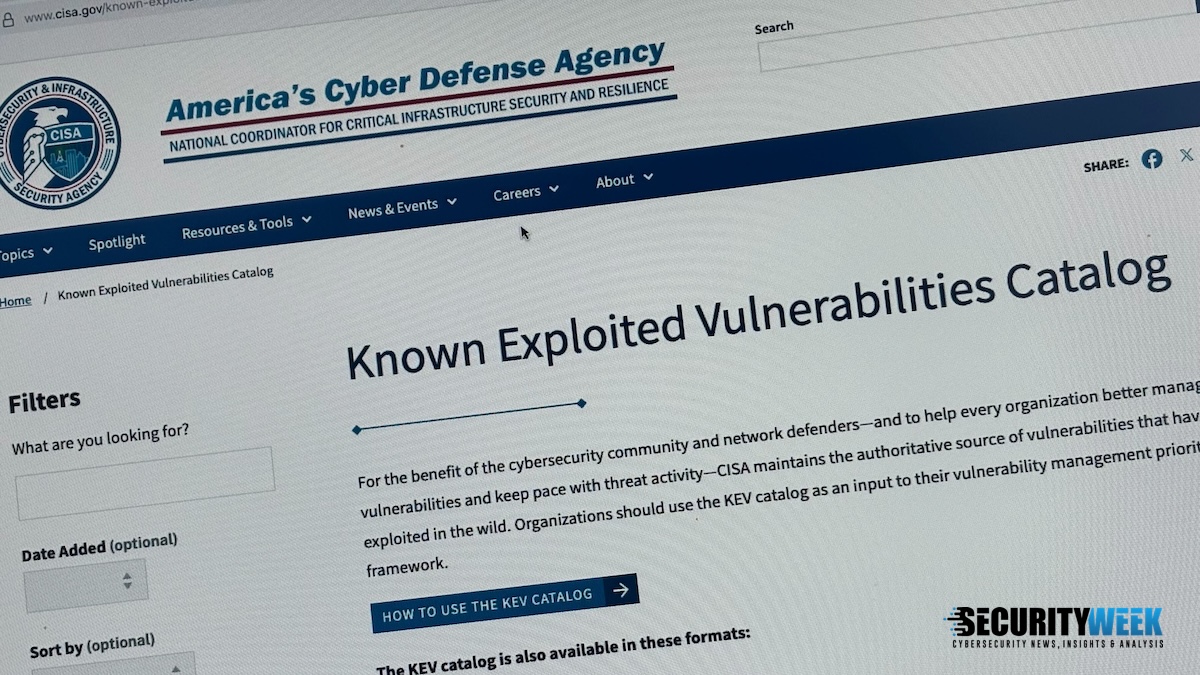
The US cybersecurity agency CISA on Thursday warned that threat actors have been exploiting a recent OSGeo GeoServer vulnerability in attacks.
Tracked as CVE-2025-58360 (CVSS score of 9.8), the critical-severity bug is described as an XML External Entity (XXE) issue that could allow attackers to access arbitrary files, conduct SSRF attacks, or cause denial-of-service (DoS) conditions.
“The application accepts XML input through a specific endpoint /geoserver/wms operation GetMap. However, this input is not sufficiently sanitized or restricted, allowing an attacker to define external entities within the XML request,” GeoServer’s maintainers said last month.
Patches for the security defect were included in GeoServer version 2.28.1, which was announced on November 25. The update also addressed a medium-severity XSS vulnerability in the application (tracked as CVE-2025-21621).
Packages impacted by the issue include docker.osgeo.org/geoserver, org.geoserver.web:gs-web-app (Maven), and org.geoserver:gs-wms (Maven), which should be updated to versions 2.25.6, 2.26.3, or 2.27.0.
On Thursday, CISA added CVE-2025-58360 to its Known Exploited Vulnerabilities (KEV) list, without providing details on the observed in-the-wild exploitation.
However, based on advisories from cybersecurity firm Wiz and the Canadian Cyber Centre, an exploit for the bug has existed since late November.
Per Binding Operational Directive (BOD) 22-01, federal agencies have three weeks to identify and patch vulnerable GeoServer instances within their environments.
It’s worth noting that CVE-2025-58360 is the third exploited GeoServer vulnerability documented by CISA this year. In June, it warned of CVE-2022-24816’s exploitation and in July it warned that CVE-2024-36401 had been targeted in attacks.
In September, CISA revealed that, four days before its July alert, a threat actor exploited the year-old GeoServer defect to compromise a federal agency.
Related: Unpatched Gogs Zero-Day Exploited for Months
Related: Google Patches Mysterious Chrome Zero-Day Exploited in the Wild
Related: Microsoft Patches 57 Vulnerabilities, Three Zero-Days
Related: Android Zero-Days Patched in December 2025 Security Update






